

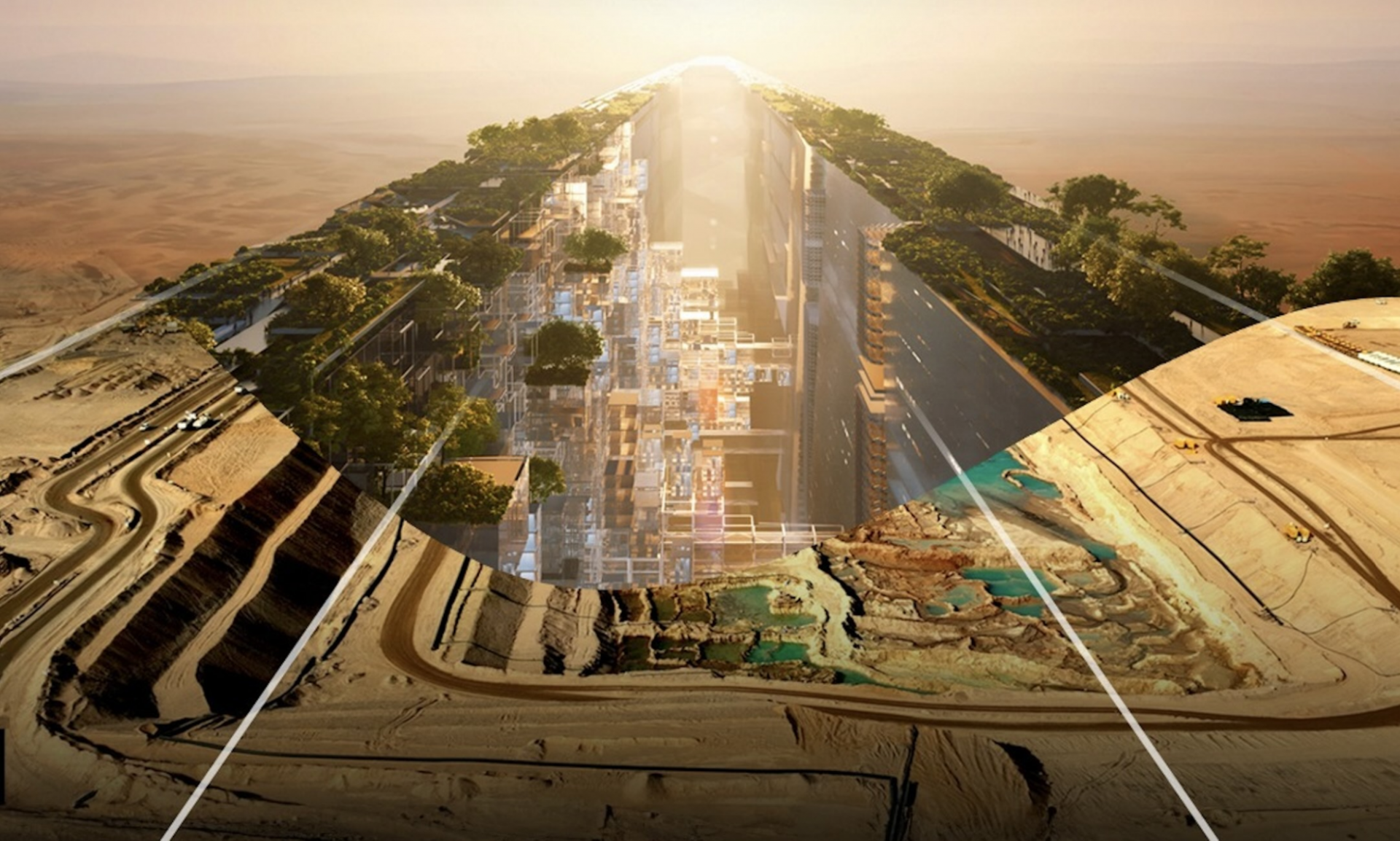
In the northwestern corner of Saudi Arabia, stretching across desert plains and coastal waters of the Red Sea, a revolutionary city is rising—a city unlike any the world has seen before. NEOM, an acronym derived from the Greek word “Neo” (new) and the Arabic word “Mustaqbal” (future), is a $500 billion smart mega-city that represents the cornerstone of Saudi Arabia’s Vision 2030.
Envisioned as a global hub for innovation, sustainability, and technology, NEOM is not merely a construction project—it’s a blueprint for the future of civilization. With plans for zero-carbon cities, autonomous transportation, AI-driven services, and regenerative ecosystems, NEOM aims to redefine urban life on Earth.
This article delves into the vision, design, sectors, and global significance of NEOM, offering a deep look into Saudi Arabia’s most futuristic venture.
What is NEOM?
NEOM is a region-wide urban development project located in the Tabuk Province, spanning over 26,500 square kilometers—an area larger than many countries. The site offers dramatic desert landscapes, a 470-kilometer Red Sea coastline, mountains, and access to regional markets in the Middle East, Africa, and Europe.
NEOM’s aim is to host more than 9 million residents, powered entirely by renewable energy, with infrastructure built around nature, innovation, and well-being.
It is made up of several core zones, each representing a unique vision for life and industry:
Core NEOM Projects and Zones
1. The Line – A Revolution in Urban Living
The most iconic and ambitious part of NEOM, The Line is a 170-kilometer linear city that will house 9 million people in a narrow vertical structure just 200 meters wide and 500 meters tall. It will operate without cars, roads, or carbon emissions, powered entirely by renewable energy.
Key features:
- A high-speed rail system for end-to-end travel in 20 minutes
- Vertical living and working spaces
- AI-powered urban services
- Walkable communities with nature preserved at ground level
The Line is being hailed as the most futuristic city concept in the world.
2. Oxagon – The World’s Largest Floating Industrial Hub
Located on the Red Sea, Oxagon is NEOM’s industrial and logistics hub. Shaped like an octagon and partially built on water, Oxagon will be a global center for advanced manufacturing, robotics, AI, and logistics.
Key highlights:
- The world’s largest floating structure
- Integration with the automated port and supply chain
- Industrial innovation zones for clean energy and nanotech
- Sustainable construction and circular economy principles
3. Trojena – A Mountain Tourism Destination
Trojena is NEOM’s year-round mountain resort located in the Sarawat mountains. Unlike the desert image of Saudi Arabia, Trojena offers snow-capped peaks, artificial lakes, and alpine villages.
Planned features:
- Ski slopes and winter sports facilities
- Luxury wellness retreats
- Outdoor adventure tourism
- The region’s first outdoor cinema in the snow
Trojena will also host the Asian Winter Games in 2029, a milestone for Saudi tourism.
4. Sindalah – A Luxury Island Destination
Set to open in 2024, Sindalah is a high-end island resort that will serve as NEOM’s gateway to the Mediterranean and Red Sea elite.
Offerings include:
- A luxury marina for superyachts
- Designer hotels and beach clubs
- Championship golf courses
- Boutiques and gourmet dining
Sindalah aims to attract the global elite and boost NEOM’s position in high-end tourism.
also :
NEOM and Vision 2030
NEOM is one of the flagship projects of Vision 2030, the strategic plan to diversify Saudi Arabia’s economy, reduce reliance on oil, and develop public service sectors like health, education, and tourism.
NEOM is expected to:
- Create over 380,000 jobs
- Contribute $48 billion to Saudi GDP by 2030
- Attract global foreign direct investment (FDI)
- Act as a testing ground for future urban technologies
NEOM Sustainability and Environment
NEOM is designed with regenerative development at its core. The goal is not just to minimize environmental harm, but to restore and enhance ecosystems. Some key sustainability goals include:
- 100% renewable energy from solar, wind, and hydrogen
- Sustainable agriculture using desert greening techniques
- Desalinated water using solar-powered plants
- Biodiversity protection across marine and desert habitats
- Net-zero carbon emissions across all sectors
NEOM also plans to be a leader in green hydrogen, with a $5 billion green hydrogen plant under construction—the largest of its kind.
Technological Innovation and AI Integration
NEOM positions itself as a global hub for innovation, with AI, robotics, and IoT deeply embedded into every sector.
Technological priorities:
- Autonomous transportation (self-driving cars, drones, electric air taxis)
- Smart homes and cities with real-time data ecosystems
- AI-powered public services and infrastructure
- Blockchain-based digital government
- Research and development hubs in biotech, fintech, and cybertech
NEOM aims to attract global talent and startups to foster next-generation solutions that can be exported globally.
Challenges and Global Reception
Despite its visionary scale, NEOM faces several challenges:
- Execution complexity: Constructing an entirely new ecosystem from scratch is a logistical and financial challenge.
- Environmental impact: Ensuring development aligns with conservation goals.
- Cultural adaptation: Attracting international residents while maintaining local values.
- Geopolitical perceptions: Navigating global public opinion and investor confidence.
However, with robust backing from the Public Investment Fund (PIF) and partnerships with international firms like Foster + Partners, Aecom, and Bechtel, NEOM has secured both capital and expertise to advance steadily.
Timeline and Progress
NEOM’s development is structured in phases:
- 2024: Launch of Sindalah Island and partial infrastructure rollouts
- 2025-2026: Initial development of The Line, Trojena, and Oxagon
- 2029: Hosting of the Asian Winter Games in Trojena
- 2030: Major residential, commercial, and industrial milestones completed
The NEOM International Airport (NIA) is also under development to serve residents, tourists, and businesses, with direct connectivity to Europe, Asia, and the GCC.
NEOM’s Global Impact
NEOM is not just a Saudi initiative—it’s a global experiment in how future cities can operate. Its success will:
- Influence global urban design and sustainability standards
- Accelerate the transition to clean energy and AI integration
- Serve as a platform for emerging technologies
- Position Saudi Arabia as a leader in next-generation innovation and tourism
As climate change, urbanization, and digital transformation accelerate, NEOM offers a potential model for other nations seeking to reimagine human civilization in harmony with nature and technology.
Conclusion
NEOM is not just a city—it is a bold statement about the future. With its blend of sustainability, innovation, and ambition, NEOM is poised to reshape what we think is possible in urban development. Whether through its vertical city, snow-capped resorts, floating ports, or green hydrogen plants, NEOM is set to put Saudi Arabia at the forefront of global transformation.
As it rises from the sands of the desert, NEOM is a symbol of possibility—a vision of a better, smarter, and more sustainable tomorrow.