

In the heart of Saudi Arabia’s vast desert lies a place where ancient civilizations, dramatic sandstone cliffs, and modern art installations converge in perfect harmony. That place is AlUla—a living museum and one of the Kingdom’s most ambitious cultural tourism destinations under Vision 2030.
AlUla is more than a historical site—it is a story thousands of years in the making, where Nabatean tombs, pre-Islamic inscriptions, lush oases, and contemporary architecture come together. Through strategic development by the Royal Commission for AlUla (RCU), the region is being positioned as a global cultural and heritage destination, attracting explorers, historians, and artists from around the world.
In this article, we explore AlUla’s unique identity, its ancient heritage, its transformation into a global tourism hub, and its critical role in shaping the future of sustainable, cultural travel in Saudi Arabia.
Historical and Archaeological Significance
AlUla is one of the oldest inhabited regions on the Arabian Peninsula, with archaeological findings tracing human activity back more than 200,000 years. For centuries, it served as a crossroads for caravans traveling along the Incense Route, connecting Arabia with Egypt, Mesopotamia, and India.
Key Historical Sites:
1. Hegra (Madain Salih) – Saudi Arabia’s First UNESCO World Heritage Site
Built by the Nabateans in the 1st century CE, Hegra is the southern sister city to Petra in Jordan. It boasts 111 well-preserved tombs, intricately carved into rose-red sandstone cliffs. Hegra was the first Saudi archaeological site to be designated by UNESCO in 2008.
2. Dadan – Capital of Ancient Dadanite and Lihyanite Kingdoms
A center of power and trade between the 9th and 2nd centuries BCE, Dadan is home to massive lion tombs, temples, and rock inscriptions revealing rich pre-Islamic history.
3. Jabal Ikmah – Open-Air Library of Inscriptions
Often called the “Louvre of Ancient Arabia,” Jabal Ikmah features hundreds of ancient inscriptions in early Arabic scripts, including Aramaic, Dadanitic, and Thamudic.
These sites make AlUla a treasure trove for archaeologists, historians, and cultural travelers.
AlUla in Vision 2030
AlUla’s transformation is a core component of Saudi Arabia’s Vision 2030, a national plan to diversify the economy and promote culture, tourism, and heritage. The Royal Commission for AlUla (RCU) was established in 2017 to oversee the development of the region, balancing preservation with innovation.
Objectives:
- Attract 2 million visitors annually by 2035
- Create over 38,000 jobs
- Generate SAR 120 billion ($32 billion) in economic impact
- Establish AlUla as a premier global destination for culture and nature
RCU’s approach is centered around sustainable development, cultural diplomacy, and community engagement—empowering local residents while welcoming the world.
Key Developments and Attractions
1. Maraya Concert Hall
A marvel of modern architecture, Maraya is the world’s largest mirrored building, blending into AlUla’s desert landscape. It has hosted global artists such as Andrea Bocelli, Alicia Keys, and Lang Lang, making AlUla a new cultural hub for international performances.
2. AlUla Old Town
A maze of 400 mudbrick homes, narrow alleys, and ancient mosques, AlUla Old Town is being restored as a living heritage site, with cafes, artisan shops, and museums. Guided tours offer insights into the town’s role during the Islamic era and beyond.
3. Elephant Rock (Jabal Al-Fil)
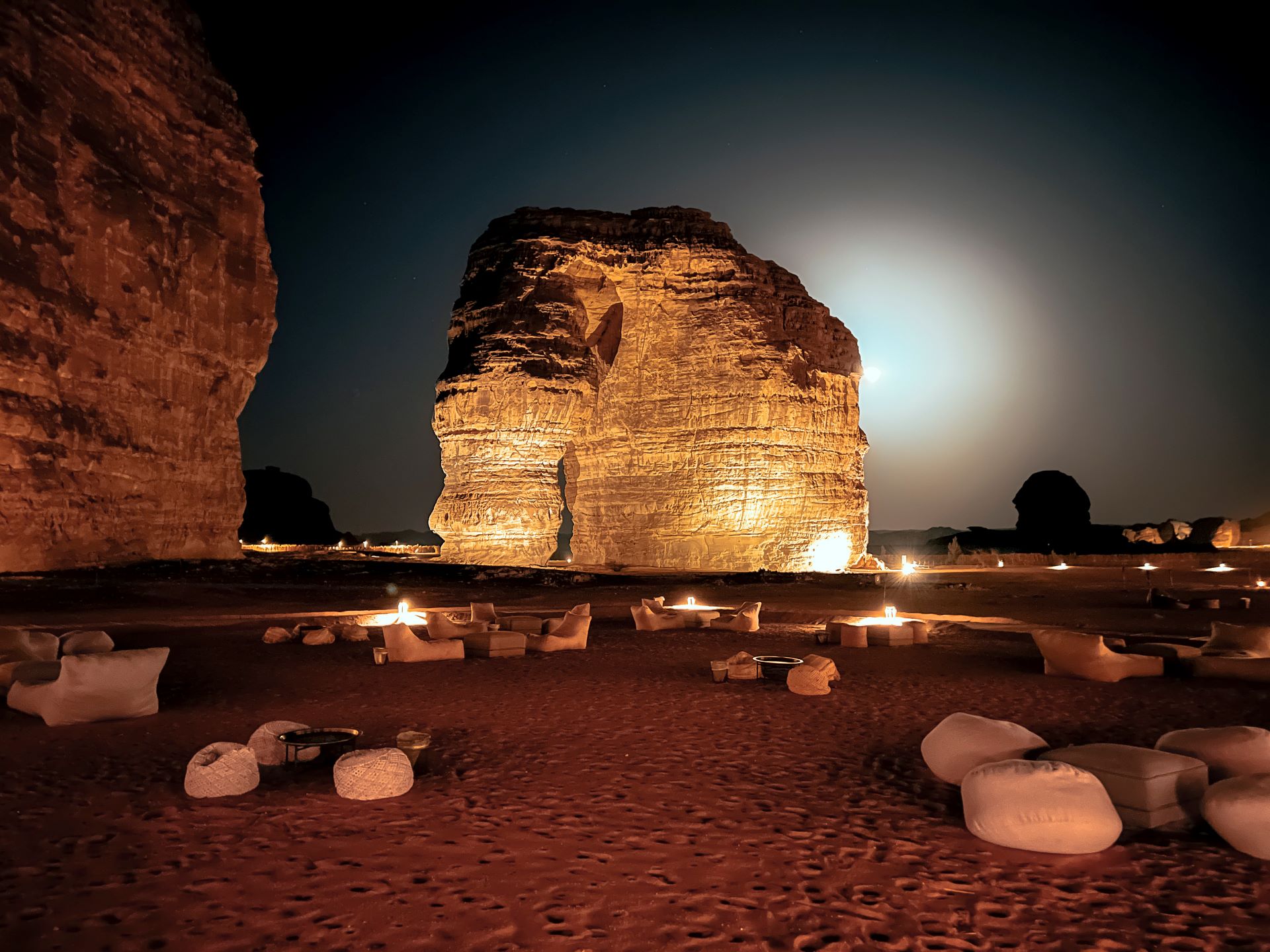
A natural sandstone rock formation resembling an elephant, it’s one of AlUla’s most photographed landmarks. Surrounded by desert lounges, cafes, and seasonal events, it’s a symbol of AlUla’s unique geology.
4. Adventure and Wellness Tourism
- Hot air balloon rides, ziplining, and rock climbing
- Stargazing experiences in AlUla’s pristine night skies
- Luxury desert wellness retreats with yoga and sound therapy
These experiences cater to a growing segment of eco-conscious and experience-driven travelers.
Sustainability and Regeneration
The development of AlUla is rooted in a regenerative tourism model, aiming not only to protect the environment but to revive it. AlUla’s unique ecosystem—comprising palm groves, sandstone mountains, and desert flora—is under protection through large-scale initiatives.
Environmental Commitments:
- Creation of the Sharaan Nature Reserve
- Reintroduction of endangered Arabian wildlife
- Use of solar energy and sustainable water management
- Preservation of traditional farming techniques in the oasis
RCU also collaborates with local farmers and artisans to support traditional livelihoods and incorporate them into the tourism economy.
Arts, Culture, and Global Engagement
AlUla is becoming a canvas for global artists and a platform for cross-cultural dialogue. The Desert X AlUla exhibition, held annually since 2020, showcases contemporary installations by artists from around the world, set against the desert landscape.
Other cultural initiatives include:
- AlUla Arts Festival: Featuring visual arts, film, fashion, and live performances
- Cultural Residencies: Inviting international artists, writers, and chefs to live and create in AlUla
- French-Saudi Collaboration: The AFALULA partnership supports archaeological exploration and cultural development with leading French institutions
These efforts position AlUla as a cultural bridge between Saudi Arabia and the world.
Visitor Experience and Accessibility
How to Get There:
- Direct flights to AlUla International Airport (ULH) from Riyadh, Jeddah, and Dubai
- VIP travel packages including private jet services and luxury accommodation
Where to Stay:
- Habitas AlUla: Eco-luxury resort blending nature and comfort
- Banyan Tree AlUla: A 5-star desert retreat in Ashar Valley
- Sharaan Resort (Upcoming): Designed by Jean Nouvel and carved into the mountain, this future resort will redefine luxury in the desert
How to Explore:
- Curated heritage tours with certified local guides
- Private photography excursions
- Culinary experiences featuring local and international chefs
From budget travelers to luxury seekers, AlUla offers a wide range of experiences for every type of tourist.
Global Recognition and Awards
AlUla has received praise from numerous international media and organizations:
- Named one of TIME Magazine’s World’s Greatest Places
- Featured in Condé Nast Traveler, CNN Travel, and National Geographic
- Host of the World Archaeological Summit and other academic forums
These accolades reinforce AlUla’s rising status as a world-class travel destination.
Challenges and Vision
While the journey is ambitious, challenges such as balancing conservation with development, preserving authenticity, and building local capacity remain. However, through phased planning, international partnerships, and visionary leadership, AlUla is steadily delivering on its promise.
The long-term vision is to position AlUla as a model for heritage-led development, where the past inspires the future, and where culture, nature, and people flourish together.
Conclusion
AlUla is a destination like no other—a timeless oasis where history, nature, art, and innovation come together under the desert sun. As Saudi Arabia opens up to the world, AlUla stands as a beacon of heritage and hospitality, offering travelers a rare opportunity to experience ancient wonders in a modern, sustainable setting.
From UNESCO tombs and mirrored concert halls to palm-lined valleys and starry desert nights, AlUla is not just a place—it’s a journey through time, a vision of the future, and a testament to what Saudi Arabia is becoming.