
Saudi Arabia is undergoing one of the most ambitious transformations in the world, driven by Vision 2030, a strategic framework aimed at reducing dependence on oil, diversifying the economy, and developing public service sectors. Central to this transformation are mega projects—large-scale developments that combine innovation, sustainability, and cultural heritage to position the Kingdom as a global hub for business, tourism, and technology.
From futuristic cities powered by renewable energy to entertainment hubs and sustainable tourism destinations, Saudi Arabia’s mega projects are redefining urban life and economic potential. This article dives into NEOM, The Line, and other groundbreaking projects that are shaping the future of Saudi Arabia.
NEOM: A Bold Vision for the Future
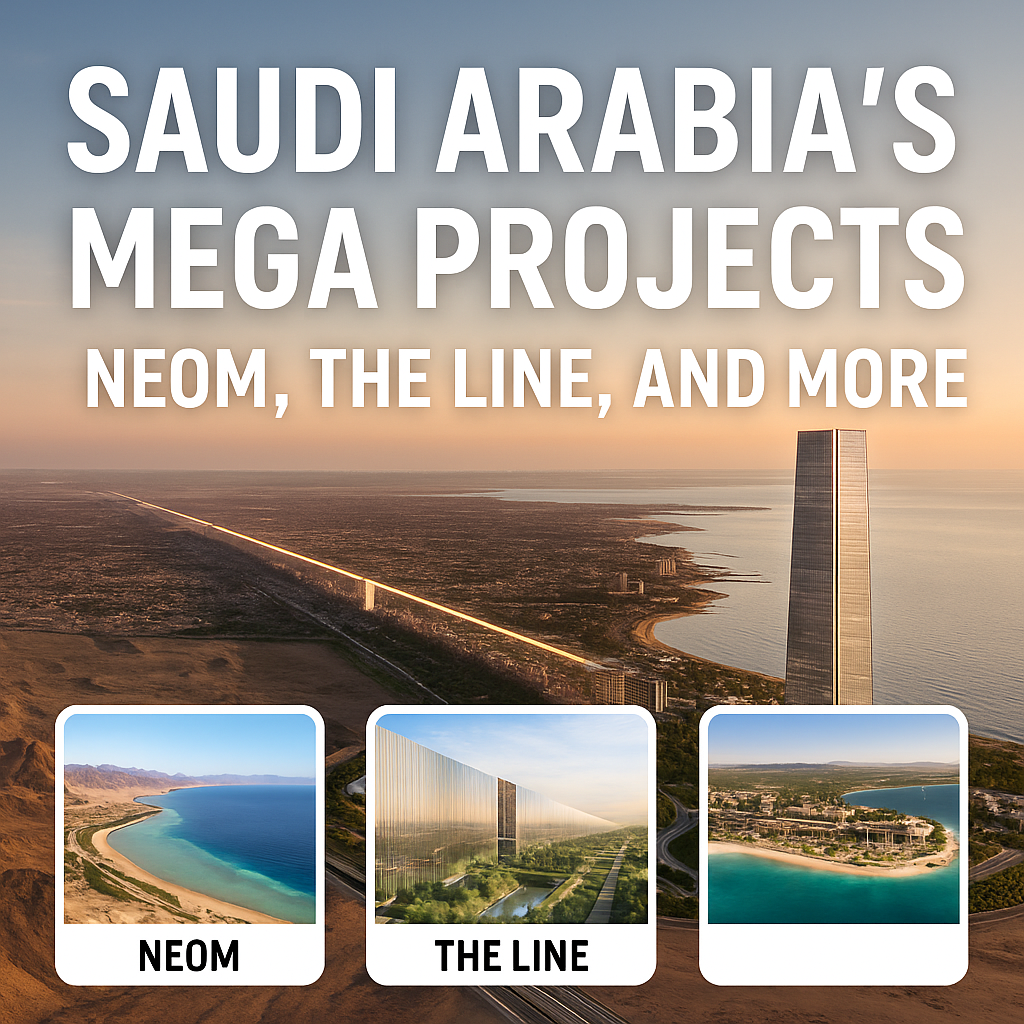
NEOM is perhaps Saudi Arabia’s most ambitious mega project, representing a $500 billion investment in the creation of a futuristic city-state in the northwestern region of the Kingdom. The project’s name is derived from the Greek word “Neo” (new) and the Arabic letter “M” (representing the future).
Key Highlights of NEOM:
- Location: Situated along the Red Sea coast, covering 26,500 square kilometers.
- Innovation Hub: NEOM will be a center for technology, biotechnology, energy, and water innovation.
- Sustainability: 100% renewable energy, with zero cars, zero streets, and zero carbon emissions.
NEOM’s vision is to create a global living laboratory, integrating cutting-edge technology with environmental stewardship. It’s designed to attract global talent and serve as a model for sustainable urban living.
The Line: Revolutionizing Urban Living
At the heart of NEOM lies The Line, a 170-kilometer-long linear city that reimagines the concept of urban design.
Key Features of The Line:
- Zero Cars, Zero Roads, Zero Carbon: Residents will have access to essential services within a five-minute walk, eliminating the need for cars.
- AI-Powered Infrastructure: Smart technology will manage traffic, utilities, and environmental systems.
- Nature Preservation: 95% of the land will be preserved for nature, minimizing the environmental footprint.
The Line represents a new era of urban planning, prioritizing human well-being and sustainability over sprawl. It’s designed to house 9 million residents while maintaining zero carbon emissions.
Qiddiya: The Capital of Entertainment, Sports, and Culture
Another cornerstone of Saudi Arabia’s Vision 2030 is Qiddiya, an entertainment city located just outside Riyadh. Covering 334 square kilometers, Qiddiya aims to be the largest entertainment hub in the world.
Highlights of Qiddiya:
- Theme Parks: Home to the first Six Flags park in Saudi Arabia.
- Sports Facilities: Including motorsport tracks, stadiums, and golf courses.
- Cultural Venues: Museums, theaters, and performing arts centers.
Qiddiya is designed to boost domestic tourism, create employment opportunities, and position Saudi Arabia as a global destination for entertainment and sports.
Red Sea Project: A Sustainable Tourism Paradise
The Red Sea Project is a luxury tourism destination along Saudi Arabia’s western coastline, covering 28,000 square kilometers and including more than 90 pristine islands.
Key Aspects of the Red Sea Project:
- Sustainability: Powered by renewable energy, with strict measures to protect marine life and coral reefs.
- Luxury Resorts: Offering eco-friendly accommodations blending luxury with nature.
- Marine and Desert Activities: Diving, snorkeling, desert safaris, and cultural experiences.
This project aims to make Saudi Arabia a premier global tourist destination while maintaining its natural environment.
AMAALA: The Riviera of the Middle East
Situated along the northwestern coast, AMAALA is a luxury wellness destination focusing on health, arts, and culture.
Key Features of AMAALA:
- Three Main Resorts: Dedicated to wellness and sports, arts and culture, and sea, sun, and lifestyle.
- Sustainability: Powered by renewable energy and designed to achieve zero waste.
- Marine Conservation: Initiatives to protect the Red Sea’s unique biodiversity.
AMAALA is part of Saudi Arabia’s vision to redefine luxury tourism with a focus on health and sustainability.
Diriyah Gate: The Birthplace of Saudi Arabia
Diriyah Gate is a cultural heritage project aimed at restoring the historic city of Diriyah, the original home of the Saudi royal family.
Project Highlights:
- UNESCO World Heritage Site: The At-Turaif District is the centerpiece of the project.
- Cultural Hub: Museums, cultural centers, and hospitality offerings showcasing Saudi Arabia’s history.
- Traditional Najdi Architecture: Preserving authentic Arabian design.
Diriyah Gate is designed to connect the past with the present, offering visitors a glimpse into Saudi Arabia’s rich heritage.
King Salman Park: The Green Heart of Riyadh
Spanning 13.4 square kilometers, King Salman Park will be the largest urban park in the world, located in Riyadh.
Key Features:
- Green Spaces: Extensive gardens, lakes, and recreational areas.
- Cultural Venues: Museums, theaters, and an open-air amphitheater.
- Sports Facilities: Including a golf course, running tracks, and cycling paths.
King Salman Park is part of Saudi Arabia’s plan to improve the quality of life for residents and enhance urban greenery.
Soudah Development: Highlands Tourism
Located in the Asir region, Soudah Development focuses on eco-tourism in the mountainous southwest.
Project Objectives:
- Nature Preservation: Protecting forests, valleys, and wildlife.
- Luxury Resorts: Offering unique experiences with panoramic mountain views.
- Cultural Engagement: Promoting local traditions and heritage.
This project aligns with the Saudi Green Initiative to promote sustainable tourism in the Kingdom.
Sustainability at the Core of Mega Projects
All Saudi Arabia’s mega projects prioritize sustainability, aligning with global environmental goals:
- Renewable Energy: NEOM and other projects are committed to using 100% renewable energy.
- Eco-Tourism: The Red Sea Project, AMAALA, and Soudah Development aim to preserve natural ecosystems.
- Green Spaces: King Salman Park and Diriyah Gate focus on improving urban living while maintaining cultural identity.
Global Partnerships and Opportunities
Saudi Arabia’s mega projects have attracted global investors, architectural firms, and technology companies, creating opportunities for international collaboration.
- Architectural Innovation: Leading firms like Foster + Partners and BIG are involved in designing The Line and NEOM.
- Technology Integration: Collaborations with AI companies, renewable energy firms, and infrastructure experts ensure that these projects are cutting-edge.
Conclusion: A Bold Leap into the Future
Saudi Arabia’s mega projects are reshaping the future of the Kingdom and the world. These developments reflect a bold commitment to innovation, sustainability, and cultural preservation.
Whether it’s the futuristic vision of NEOM, the sustainable luxury of the Red Sea Project, or the cultural revival of Diriyah Gate, these projects symbolize Saudi Arabia’s transformation under Vision 2030.
Stay connected with SaudiNews.de for latest updates, exclusive insights, and in-depth stories about Saudi Arabia’s mega projects and their global impact.