

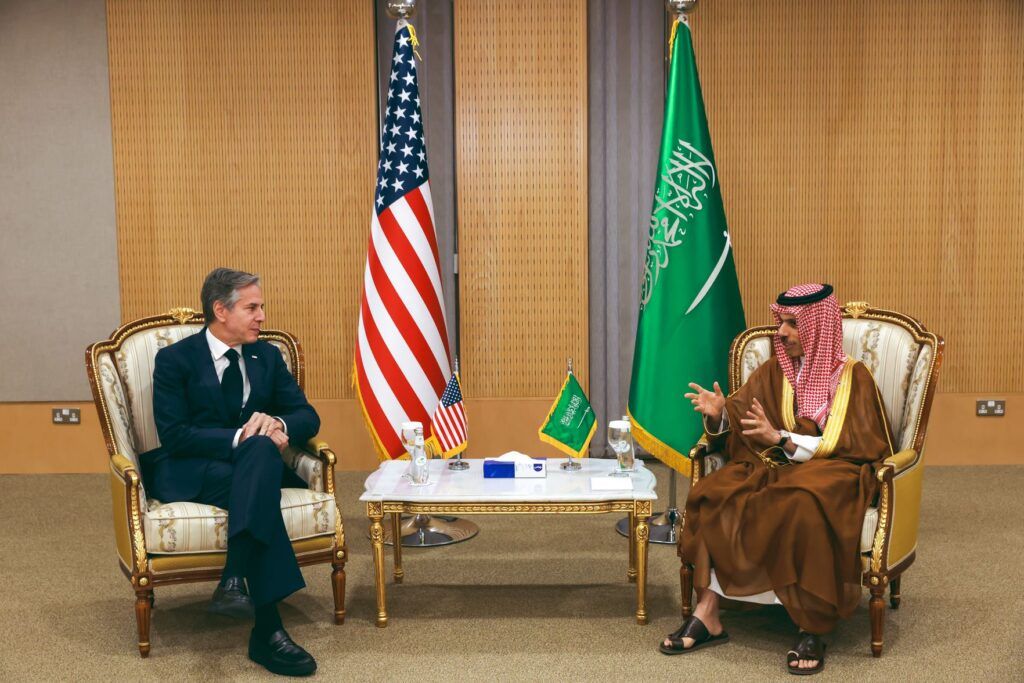
RIYADH — In a historic announcement that could reshape the future of energy collaboration between the United States and Saudi Arabia, U.S. Energy Secretary Chris Wright revealed on Sunday that both nations are preparing to sign a long-term agreement on civil nuclear energy and technology. Speaking at a press conference held in Riyadh, Secretary Wright emphasized that the agreement will be rooted in a “123 Agreement” framework—an essential legal foundation for peaceful nuclear cooperation under U.S. law.
This upcoming partnership signals a significant advancement in U.S.-Saudi energy relations, setting the stage for mutual cooperation in developing nuclear energy for peaceful and sustainable purposes. According to Wright, further details about the scope and mechanisms of the agreement will be revealed later this year, as negotiations and planning between both governments progress.
What is the 123 Agreement?
The centerpiece of this proposed alliance is the so-called “123 Agreement,” named after Section 123 of the U.S. Atomic Energy Act of 1954. This legal mechanism establishes the conditions under which the U.S. can engage in nuclear cooperation with foreign governments, ensuring that any joint civil nuclear activities are conducted peacefully and meet strict non-proliferation criteria.
The agreement mandates that partner countries uphold safety, security, and non-military use of nuclear technologies, aligning with international standards set by the International Atomic Energy Agency (IAEA). Once enacted, the agreement allows the United States to export nuclear materials, equipment, and technology—including reactors and uranium fuel—to its partners.
By expressing his confidence that such a pact “will certainly be” signed with Saudi Arabia, Secretary Wright has effectively confirmed that Washington sees Riyadh as a key strategic partner in global civil nuclear development. The agreement would mark a major milestone in Middle Eastern nuclear diplomacy and U.S. foreign energy policy.
A Strategic Energy Shift in the Middle East
Secretary Wright’s announcement comes during his regional tour of the Gulf, which began in the United Arab Emirates and will continue with visits to Qatar. His presence in Riyadh underscores Washington’s growing interest in shaping the future of energy cooperation with Gulf states, particularly amid the global shift toward cleaner and more diversified energy sources.
Saudi Arabia, a long-time leader in global oil production, has been actively seeking to diversify its energy mix as part of its broader Vision 2030 reform strategy. The kingdom aims to introduce nuclear energy into its national grid to reduce dependence on fossil fuels, improve sustainability, and meet rising domestic energy demands.
Civil nuclear energy offers Saudi Arabia a long-term solution to balance domestic consumption and export capacity, ensuring that more of its oil can be sold abroad while nuclear power fulfills national electricity requirements. The collaboration with the U.S. promises to accelerate these ambitions, bringing American expertise and technology into play.
Implications for Regional Energy Security
This upcoming agreement is expected to have far-reaching implications not only for Saudi Arabia’s energy transformation but also for regional energy security. With ongoing geopolitical tensions and growing energy demands, the introduction of nuclear power as a stable and low-emission energy source could promote greater resilience and sustainability across the Gulf.
Furthermore, by aligning with the United States, Saudi Arabia would be reinforcing a long-standing bilateral relationship that spans energy, defense, and economic cooperation. It also signals Riyadh’s preference for adhering to international non-proliferation standards—a critical concern for global stakeholders monitoring nuclear developments in the region.
In recent years, other Gulf countries like the UAE have also entered the civil nuclear arena, launching the Barakah Nuclear Energy Plant with international support. Saudi Arabia’s entry, particularly with U.S. backing, could elevate the region’s role in peaceful nuclear advancement while setting a precedent for transparency and collaboration.
Economic and Technological Benefits
The agreement also carries significant economic and technological advantages for both parties. For Saudi Arabia, it represents access to some of the most advanced nuclear technologies and scientific expertise in the world. The U.S. nuclear industry—spanning private firms, universities, and national laboratories—offers decades of experience in reactor development, nuclear safety, and waste management.
For the United States, the agreement ensures that its energy companies and nuclear technology firms can play a prominent role in the Middle East’s civil nuclear market, creating new business opportunities and reinforcing America’s leadership in the peaceful use of atomic energy.
Moreover, educational and technical training programs are expected to accompany the agreement, enabling the transfer of knowledge and fostering a new generation of Saudi nuclear scientists, engineers, and safety experts. Such capacity-building initiatives align with the long-term goals of Vision 2030, which seeks to empower local talent and reduce reliance on foreign expertise.
Environmental Considerations and Global Climate Goals
A nuclear partnership between the U.S. and Saudi Arabia also dovetails with international climate objectives. As nations seek to reduce carbon emissions and meet targets set by agreements like the Paris Climate Accord, nuclear energy is gaining recognition as a low-carbon solution that can complement renewable sources like solar and wind.
For Saudi Arabia, whose environmental commitments are steadily increasing, nuclear energy provides a pathway to decarbonize the power sector without compromising energy security. The agreement with the U.S. thus supports both local sustainability and global environmental goals.
A Transparent and Regulated Path Forward
While the political and economic advantages are substantial, the deal is expected to include strong oversight mechanisms. The U.S. has historically insisted on stringent non-proliferation terms in its 123 Agreements, ensuring that nuclear materials and technology are not diverted for military purposes.
It is widely expected that the agreement with Saudi Arabia will include clauses that bind both parties to cooperate fully with IAEA inspections, safeguard procedures, and transparency requirements. This approach not only enhances trust but also sets a regional benchmark for responsible nuclear governance.
Looking Ahead: Timeline and Next Steps
Secretary Wright indicated that the agreement’s details would be shared later in 2025, suggesting that negotiations are in advanced stages. The timing may also align with high-profile international forums such as the IAEA General Conference or COP30, where such a pact could be formally announced or signed.
In the interim, working groups from both nations are likely to finalize the legal frameworks, technical parameters, and export control conditions. Industry stakeholders and government officials from both sides will also be engaged in mapping out implementation strategies.
Conclusion: A Pivotal Moment in U.S.-Saudi Relations
The planned civil nuclear agreement between the United States and Saudi Arabia is a turning point in bilateral cooperation and energy policy in the Middle East. It reflects a shared vision for peaceful nuclear development, regional stability, and a sustainable future.
By combining American nuclear expertise with Saudi Arabia’s ambitious energy goals, this agreement paves the way for a cleaner, more secure energy future. It also reinforces the depth of the U.S.-Saudi partnership at a time when strategic cooperation is more critical than ever.
As the world watches, the successful implementation of this landmark agreement could become a model for other nations seeking to harness nuclear energy responsibly and collaboratively.